
We Use Plastic for Convenience — But It’s Harming Us in Return
Plastic was designed to make life easier. From packaging food to protecting products during shipping, it became the quick solution for our modern lifestyle. But convenience has come at a devastating cost.
Every year, the world produces over 400 million tonnes of plastic, and nearly 40% of it is used just once before being thrown away. According to the United Nations Environment Programme (UNEP), around 11 million tonnes of plastic waste end up in our oceans annually — a number that could triple by 2040 if nothing changes.
Research Highlights
What Is Plastic — And Why Is It a Problem From the Start?
Plastic isn’t a natural material. It’s a man-made product created from fossil fuels, mainly crude oil and natural gas. Through a process called polymerization, these raw materials are transformed into different types of plastic we use every day — from packaging to textiles to furniture fillers.
While it may seem harmless when first produced, plastic begins to harm the planet right from its creation:
⚙️ Production – Plastic manufacturing involves toxic chemicals like BPA, phthalates, and styrene, which are harmful to workers, communities, and ecosystems.
🗑️ After Use – Unlike natural materials, plastic doesn’t biodegrade. It only breaks down into smaller particles — microplastics — that spread across land, air, and oceans.
🔄 The Cycle of Harm – From the moment it’s made until long after it’s discarded, plastic releases pollution, consumes energy, and leaves behind a toxic footprint.
Plastic’s Effects on Human Health
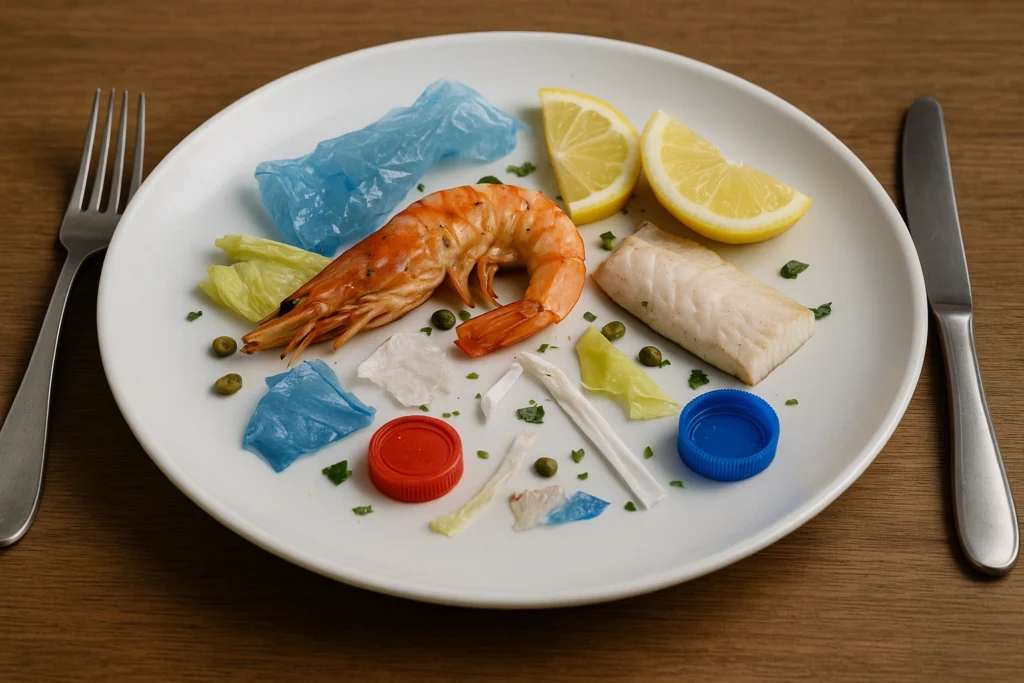
Plastic isn’t just a problem for the environment — it’s also entering our bodies. Research shows microplastics are now found in drinking water, seafood, and even the human bloodstream (WHO, 2022). These tiny particles can carry harmful chemicals such as BPA and phthalates, which are linked to:
- Hormonal imbalances
- Respiratory problems
- Fertility issues
- Increased risk of certain cancers
The scary part? We may be consuming the equivalent of a credit card’s worth of plastic every week (WWF, 2019). What started as convenience is now affecting our long-term health.
Plastic’s Effects on the Environment
From its production to disposal, plastic leaves a heavy footprint on the planet:
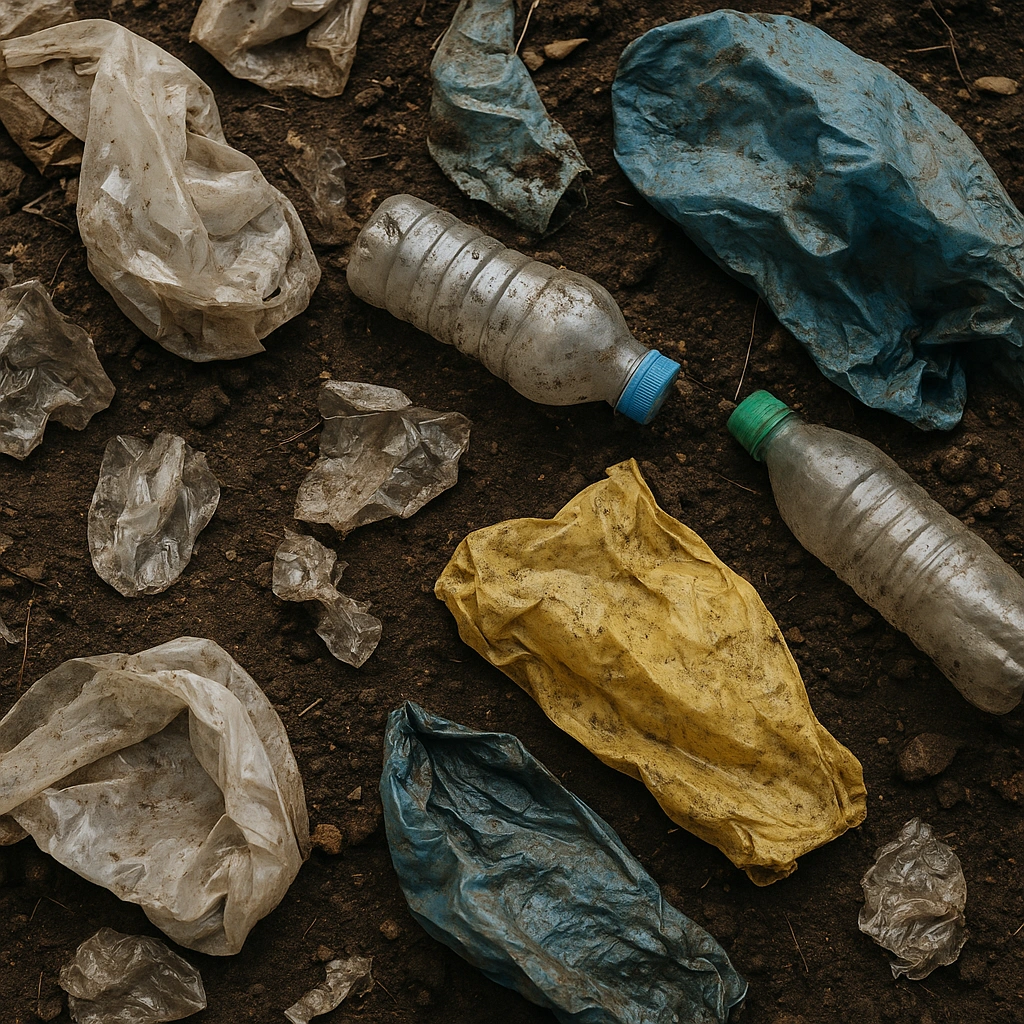
- 🌊 Oceans & Wildlife – Over 11 million tonnes of plastic waste enter the ocean each year (UNEP). Marine animals mistake plastic for food, while seabirds, turtles, and fish die from entanglement or ingestion.
- 🌱 Soil & Agriculture – Microplastics seep into soil, reducing fertility and contaminating crops.
Plastic is not only a waste problem but also a climate and biodiversity problem, making it one of the most urgent environmental challenges of our time.
The Future of Plastic Pollution: A Timeline of Impact
Today (2025)
- Over 400 million tonnes of plastic produced annually.
- 11 million tonnes enter oceans every year (UNEP, 2023).
- Microplastics already found in human blood, lungs, and placenta (WHO, 2022).
By 2030
- Plastic waste entering the ocean could reach 22 million tonnes per year if nothing changes.
- Coastal communities, fisheries, and tourism industries will face massive economic losses.
- Children born today will grow up in a world where plastic pollution is “normal.”
By 2050
- There could be more plastic than fish in the ocean by weight (Ellen MacArthur Foundation).
- Microplastics will be embedded in food chains worldwide, from plankton to humans.
- Plastic’s share of global greenhouse gas emissions may rise to 10–13%, worsening the climate crisis.
Let’s Stop This Together — Our Kids Deserve Better
We work hard, build careers, and invest in our children’s education so they can have a brighter future. But on the other hand, our daily habits and reliance on plastic are silently damaging the very world they will inherit.
While we strive to give them better opportunities, we are also depleting forests, polluting oceans, and making the planet less habitable for their survival. What good is success if the environment they live in is unsafe?
This is the real cost of convenience. And this is why we must change.
Our Next Steps Together
This is where we shift from awareness to action. We invite our customers, designers, hoteliers partners, and communities to join us in:
- Choosing furniture that’s crafted with eco-conscious materials.
- Supporting sustainable manufacturing practices that respect both people and the planet.
- Spreading awareness so more families and businesses take responsibility for reducing plastic.
Change is only possible when we take the journey together. And at Urban Maisons, we’re proud to lead the way.
Steps We’ve Already Taken
🪑 Sustainable Materials in Furniture
- Prioritizing solid wood, natural rattan, and eco-certified fabrics over synthetics.
- Reducing plastic-based coatings and shifting towards water-based, eco-friendly finishes.
♻️ Circular Design Mindset
- Designing furniture that lasts decades, reducing the need for replacements.
- Ensuring parts can be repaired, reused, or recycled — never dumped as plastic waste.

Challenges We’re Tackling
Transitioning to 100% plastic-free is not easy. Some of the challenges we continue to face include:
- Protective Packaging – Finding strong, plastic-free alternatives for long-distance shipping.
- Balancing Costs – Eco-friendly solutions can be more expensive, but we’re determined to make them accessible.
- Sustainable Fabrics – Sourcing natural materials that are durable, stylish, and weather-resistant.
Each challenge pushes us to innovate and improve, knowing that the outcome — a healthier planet and a better future for our children — is worth every effort.
Our Commitment
At Urban Maisons, this is not just a statement — it’s a mission. We are committed to achieving 100% plastic-free furniture and packaging by 2027. Every design we create, every material we choose, and every package we ship is guided by one vision: to build a sustainable future.

Because every choice we make today shapes the world our children will inherit.
For them. For tomorrow.
Q. Is plastic-free furniture really possible?
Yes. Many manufacturers, including Urban Maisons, are moving towards plastic-free furniture by using solid wood, natural rattan, eco-certified fabrics, and eco-friendly finishes. Packaging can also be made with recycled paper, cardboard, and biodegradable materials instead of plastic.
Q. Why does packaging matter in sustainability?
Packaging is often the largest source of single-use plastic in furniture delivery. By switching to plastic-free packaging such as honeycomb cardboard or molded paper pulp, brands can drastically cut waste and reduce their environmental footprint.
Q. How is Urban Maisons reducing plastic use?
At Urban Maisons, we are:
Exploring reusable shipping crates for international deliveries.
Prioritizing natural materials (wood, rattan, organic fabrics).
Replacing plastic-based coatings with water-based finishes.
Developing plastic-free packaging solutions.
Q. Why should I choose plastic-free furniture?
Choosing plastic-free furniture means supporting sustainable manufacturing, protecting ecosystems, and investing in long-lasting, eco-conscious designs. It’s not just better for the planet — it’s safer for your home and family.